Dental practices and clinics: visits, tasks, documents, and follow-ups
This page describes the operational loop of a dental practice or small clinic: patient appointment, visit preparation, consent forms and documents, administrator and clinician tasks, reminders, and follow-ups. LadVen OS keeps the organizational work around the patient in one place, but it does not replace a clinical medical information system, electronic health record, medical history, diagnoses, prescriptions, or regulated medical registries.
What problem it solves

Conceptual scenario flow: process guidance, not a UI screenshot or screenshot evidence.
In a clinic, the weak point is often not clinical care itself, but the coordination around it. The patient books a visit, but the administrator does not check documents. A clinician asks for an image or material to be prepared, but the request stays in chat. After the visit, someone needs to remind the patient about a follow-up, but that reminder lives in an employee's memory.
The scenario solves this by recording appointments, preparation, documents, internal assignments, and follow-up as tasks with owners, dates, files, and checklists. Clinical records stay in the dedicated medical system; LadVen OS manages the team's work around them.
How it works in LadVen OS

Conceptual scenario flow: process guidance, not a UI screenshot or screenshot evidence.
The scenario is assembled from already documented capabilities:
- Clients and requests — the patient as a client has contacts, organizational history, linked tasks, and non-clinical documents.
- Tasks — room preparation, document request, plan approval, patient call, and follow-up visit get an owner and deadline.
- Calendar — appointments, calls, and internal meetings are visible in the team's shared schedule.
- CRM pipeline — the booking moves from new request to preparation, visit, follow-up, and closure.
- Intake forms — a website, messenger, or phone request can become a CRM request without manual copying between spreadsheets.
- Files — consent forms, questionnaires, instructions, administrative documents, and safe attachments stay next to the task.
- Checklists — visit preparation, document checks, handouts, and follow-up steps are agreed in advance.
- Comments — administrator clarifications, manager decisions, and operational notes remain in history.
- Patient portal — when appropriate, the patient can see status, organizational documents, handouts, and upcoming visits, but not medical history.
- Automation — a follow-up call, control visit, or overdue follow-up becomes a task and reminder.
Visits, patients, and the team

Conceptual scenario flow: process guidance, not a UI screenshot or screenshot evidence.
Every visit needs a clear route: who booked the patient, which documents are needed before the visit, what should be prepared, who owns the room, who calls after the visit, and when the next contact is due. A first visit, procedure, consultation, and follow-up can follow different routes, but ownership must stay visible.
When the patient reschedules, the task is updated. When a clinician asks for a material or document, the assignment is recorded next to the visit. When the patient needs a reminder, it becomes a dated task instead of a private note.
Visit route and follow-up contact

Conceptual scenario flow: process guidance, not a UI screenshot or screenshot evidence.
A practical route looks like this: a new request or call enters CRM, the administrator confirms the service and suitable time window, the patient receives the document and consent list, and the visit task gets a clinician, room, preparation deadline, and checklist. Before the appointment, the team sees what is still expected from the patient and what is already ready. After the visit, the owner records the organizational result: which documents were handed out, whether a call is needed, whether a control visit was scheduled, and who owns the next contact.
Simple working statuses help managers: new appointment, waiting for patient confirmation, documents not ready, visit preparation, patient arrived, final comment needed, schedule follow-up, closed. These are not clinical statuses or diagnoses; they are visibility for operational work so leadership does not learn about a problem from a queue at the front desk.
Exceptions should also become tasks: patient no-show, rescheduled visit, missing documents, organizational approval for the visit plan, clinician asks for an additional material, patient waits for a call, or follow-up contact is overdue. Then the clinic sees not only the calendar, but also the unresolved work around it.
Roles, forms, portal, and automation

Conceptual scenario flow: process guidance, not a UI screenshot or screenshot evidence.
The administrator owns the incoming booking, time confirmation, documents, and reminder. The clinician sees the visit task, preparation, and organizational materials, while clinical notes stay in the dedicated system. A senior administrator or manager watches the queue, overdue work, unconfirmed visits, and missing follow-up. Documents and finance join only where an agreement, act, payment, or consent needs to be prepared.
Intake forms help avoid losing website requests: the patient leaves contact details, selects the visit type, attaches safe organizational materials, and the clinic receives a CRM request plus a first-contact task. The patient portal is useful for status, handouts, organizational documents, and upcoming visits. It should not be described as a medical patient portal with diagnoses or medical history.
Automation should cover simple operational risks: if the visit is today and documents are missing, the administrator gets a task; if the visit ends without a next step, the manager sees it in a view; if a control call is overdue, the task stays open until there is a result.
Files, checklists, and reminders
Even without clinical records, a clinic has many operational documents: consent forms, questionnaires, handouts, agreements, internal instructions, and non-sensitive process photos. They should not live in private chats; they should stay next to the task where the next step is visible.
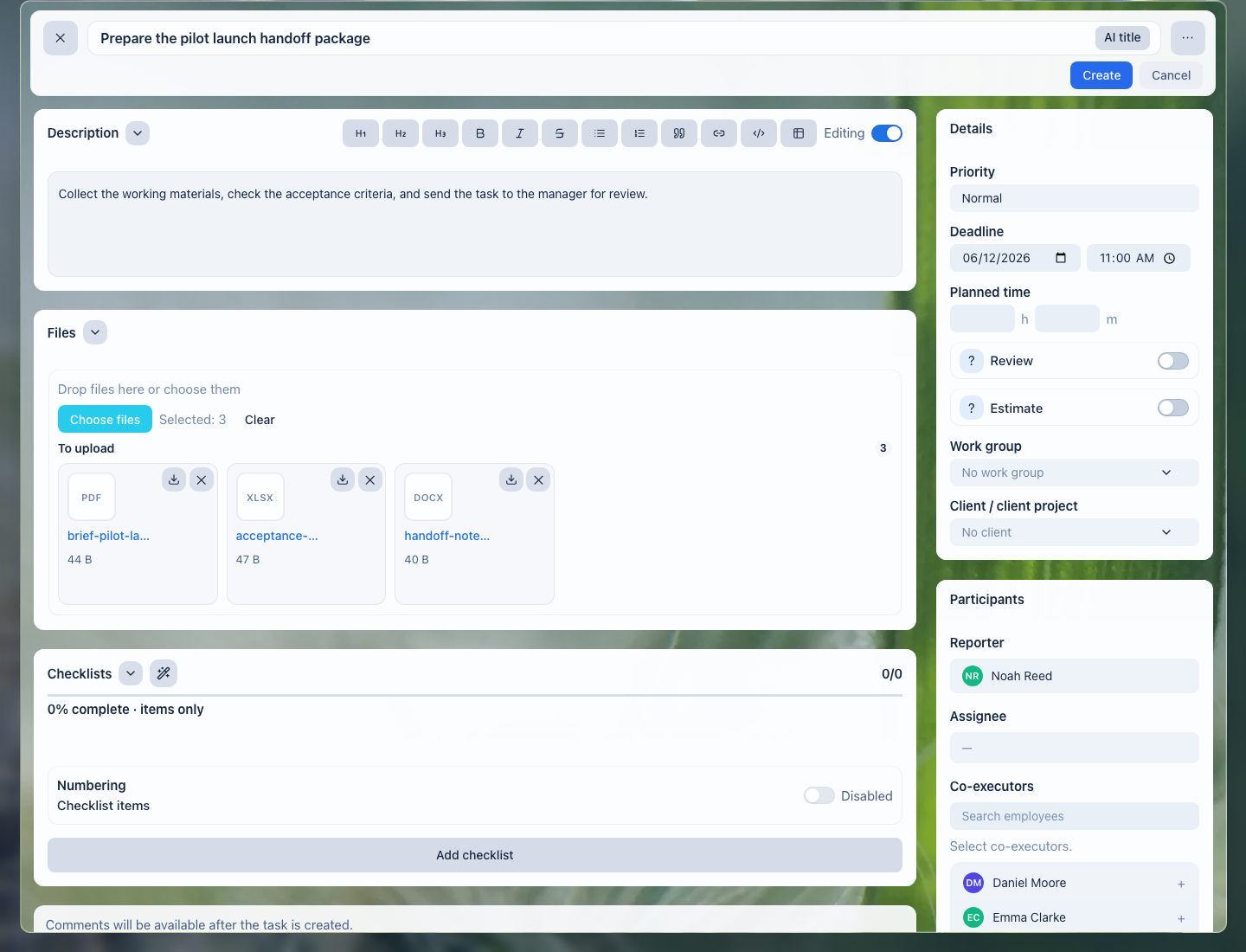
Files stay next to the work: the administrator, clinician, and manager see the same organizational material set.
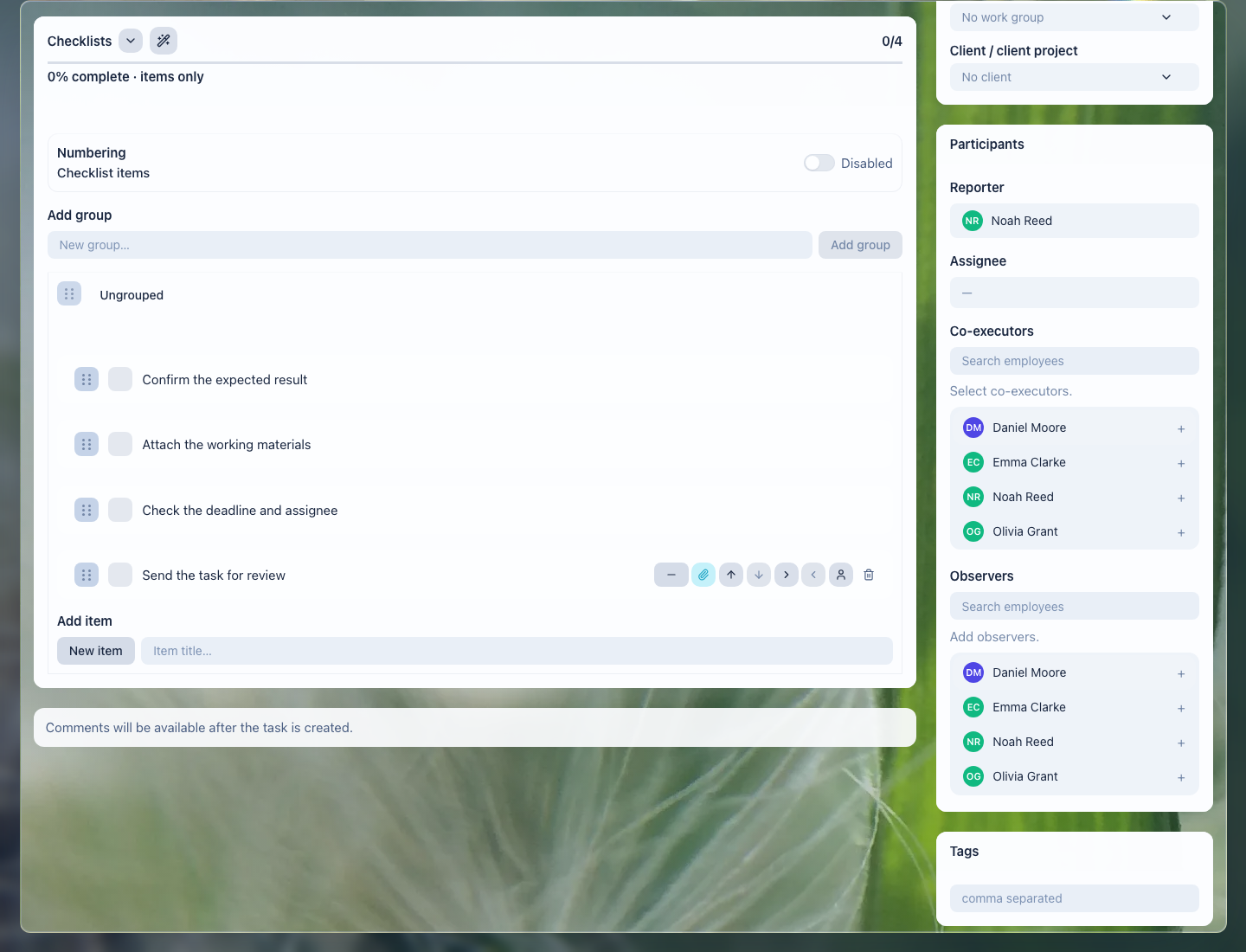
The checklist helps verify documents, preparation, final comment, and the follow-up task.
What the clinic gets

Conceptual scenario flow: process guidance, not a UI screenshot or screenshot evidence.
- every visit shows who owns preparation and the next contact;
- administrators do not keep follow-up calls and reminders in memory;
- organizational documents are not lost between email, chats, and local folders;
- leadership sees overdue work, patient waiting states, and stalled tasks;
- handoff is safer because a colleague sees the history, files, and next step.
Implementation checklist

Conceptual scenario flow: process guidance, not a UI screenshot or screenshot evidence.
- Separate common scenarios: first visit, consultation, procedure, control visit, follow-up call.
- Define what can be kept in LadVen OS and what must stay only in the dedicated medical system.
- Create task templates for visit preparation, documents, follow-up, and repeat visits.
- Add checklists: documents received, room ready, handout sent, next contact scheduled.
- Configure manager views: today, tomorrow, waiting for patient, overdue, no follow-up.
- Check access: sensitive data and internal comments should be visible only to the right employees.
What to avoid
Conceptual scenario flow: process guidance, not a UI screenshot or screenshot evidence.
- Do not use LadVen OS as a replacement for a medical record, medical history, diagnoses, or prescriptions.
- Do not store sensitive clinical data in tasks if it belongs in a dedicated medical system.
- Do not leave a repeat visit or call as an oral agreement only.
- Do not close visit preparation without a clear next step.
- Do not expose patient documents to employees who do not need them for their work.
How to measure the result
Conceptual scenario flow: process guidance, not a UI screenshot or screenshot evidence.
- share of visits prepared before the appointment without urgent clarification;
- number of tasks waiting for the patient, clinician, or administrator;
- number of missed follow-up contacts;
- time needed to find the right organizational document;
- share of visits where the next step is assigned before the task is closed.
Where to start
Conceptual scenario flow: process guidance, not a UI screenshot or screenshot evidence.
- CRM clients — keep contacts and organizational request history.
- Deals and requests — manage booking, preparation, and follow-up stages without losing ownership.
- Calendar — see appointments, calls, and team availability.
- Create a task — set up visit preparation, a call, or follow-up with owner and deadline.
- Task fields and work context — connect the work to the patient as a client, a document, and expected result.
- Task checklist — verify preparation, documents, and the next step.
- Task files — keep organizational materials next to the work.
- Task comments — record clarifications and decisions without losing context.
- Task templates and automation — repeat follow-ups and common preparations without manual setup.
- Task lists and views — control deadlines, patient waiting states, and workload.
- Review and close a task — accept the organizational result without losing the next step.
- Recurring tasks — schedule reminders for repeat visits, preventive checkups, and follow-up calls.
- CRM robots — trigger standard actions when a request moves to another stage.
- Task rules — prevent closing preparation without a result or next contact.
- Documents — keep consents, instructions, agreements, and working materials next to the process.
- Extranet client portal — give a patient or representative safe access to status and organizational documents where needed.
Request a demo
Conceptual scenario flow: process guidance, not a UI screenshot or screenshot evidence.
Want to see visits, documents, team tasks, and follow-ups on a prepared demo portal? Request a demo — we will show the scenario on safe demo data and discuss which clinical capabilities should be developed through early access.